Clark County Dog Registration Information
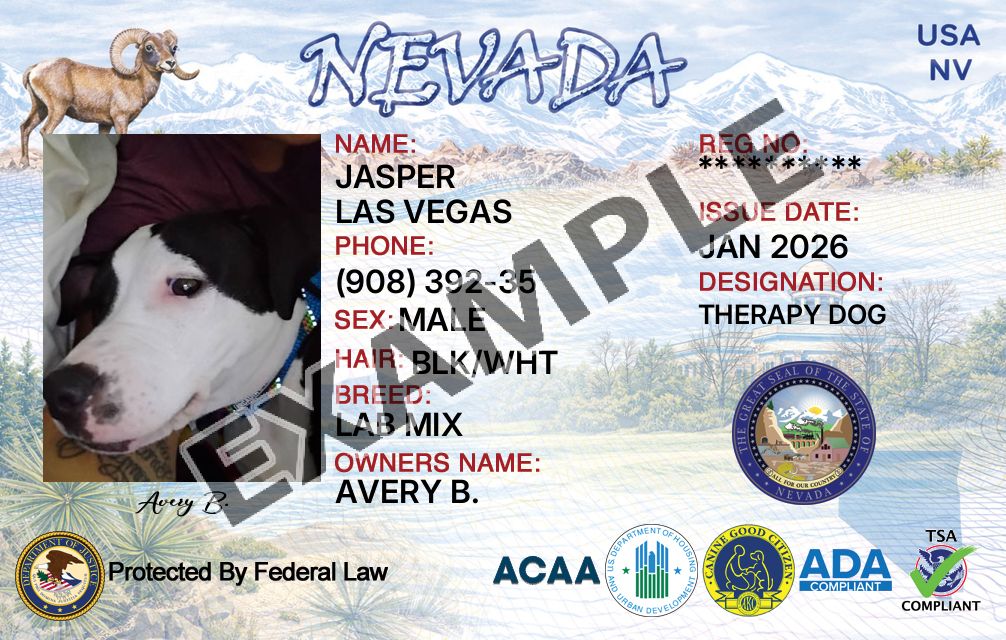
Service Dogs and Emotional Support Animals in Clark, Nevada
If you’re searching where do I register my dog in Clark County, Nevada for my service dog or emotional support dog, the most important thing to know is that “registration” usually means getting a local dog license (and staying current on rabies vaccination)—not buying an online certificate. In Clark County, dog licensing is commonly handled by the city you live in (for incorporated areas) or by Clark County Animal Protection Services (for unincorporated areas).
Where to Register or License Your Dog in Clark County, Nevada
Because licensing is often handled locally, start with the office that serves your home address (city limits vs. unincorporated Clark County). The offices below are official government agencies commonly involved in animal control dog license Clark County, Nevada questions, licensing enforcement, and rabies-related compliance.
Clark County Animal Protection Services (Unincorporated Clark County)
- Phone: (702) 455-7710
- Email: animalprotectionservicesinfo@clarkcountynv.gov
- Office Hours: Monday–Thursday, 7:30 AM–5:00 PM (administrative office closed Fridays)
- Address: Not listed in the official sources provided for this request (verify with Clark County Animal Protection Services).
City of Las Vegas — Animal Protection Services
- Street Address: 495 S Main St
- City/State/ZIP: Las Vegas, NV 89101
- Phone: (702) 229-6444 (Option #2 for dispatch)
- Email / Office hours: Not listed in the official sources provided for this request (confirm with the office).
City of North Las Vegas — Animal Protection Services
- Street Address: 2332 Las Vegas Blvd N, Ste 200
- City/State/ZIP: North Las Vegas, NV 89030
- Phone: (702) 633-1750
- Email: animalprotectionservices@cityofnorthlasvegas.com
- Office hours: Not listed in the official sources provided for this request (confirm with the office).
City of Henderson — Animal Protection Services (Animal Control)
- Street Address: 300 E Galleria Dr
- City/State/ZIP: Henderson, NV 89011
- Phone / email / office hours: Not listed in the official sources provided for this request (confirm with the office).
Overview of Dog Licensing in Clark County, Nevada
What “Registering Your Dog” Usually Means
When people ask where to register a dog in Clark County, Nevada, they are usually looking for a legally recognized way to show their dog is allowed to live in the community and is compliant with public health rules. In practice, that usually means:
- Obtaining a local pet license through the city or county authority that governs your residence
- Maintaining current rabies vaccination (and keeping documentation available)
- Following local animal ordinances (leash requirements, nuisance rules, and similar standards)
Rabies Vaccination: The Core Compliance Requirement
Across Clark County jurisdictions, rabies vaccination is a foundational requirement for dogs (and also commonly for cats and ferrets). Clark County code specifies that owners must vaccinate dogs (and cats/ferrets) over a certain age and keep vaccinations current. Even where the license is issued by a city rather than the county, rabies compliance is typically what supports licensing and enforcement.
Dog License vs. Tags, Microchips, and Online “Registrations”
A local license typically results in a license record (and often a tag). A license is different from a microchip (identification technology) and different from any online “service dog registry” or “emotional support animal registry.” If your goal is legal compliance and avoiding citations, the reliable path is the official local licensing authority that serves your address.
How Dog Licensing Works Locally in Clark County, Nevada
Step 1: Identify Your Licensing Authority (City vs. Unincorporated Clark County)
Clark County includes multiple incorporated cities and unincorporated areas. That is why answers to “animal control dog license Clark County, Nevada” can differ depending on where you live. In general:
- If you live inside a city (such as Las Vegas, North Las Vegas, or Henderson), licensing is commonly handled through that city’s animal services/animal control.
- If you live in unincorporated Clark County, the relevant authority is typically Clark County Animal Protection Services.
Step 2: Prepare Your Documents
While exact requirements vary by jurisdiction and by your dog’s circumstances, licensing commonly requires proof that rabies vaccination is current. If you are licensing a dog for the first time, also be prepared to provide basic owner and pet details (such as your name, address, and contact information). If your dog is altered (spayed/neutered), some jurisdictions may consider that in pricing or license type.
Step 3: Apply Through the Correct Office and Keep Records
Contact the appropriate office listed above and ask the most direct question: “I need a dog license in Clark County, Nevada (or in my city). What do you require for my address?” Keep a copy of your rabies certificate and your license/receipt where you can easily find it (especially if you plan to move, travel, or need to show proof to a landlord).
Common Mistake: Treating a Service Dog or ESA as a “License Type”
In many cases, a service dog or an emotional support animal still needs a standard local pet license and must follow local vaccination rules. The “service dog” or “ESA” status is usually a separate legal concept from licensing—one that affects access rights, housing rules, or accommodation rules, but not whether the animal must follow local public health requirements like rabies vaccination.
Service Dog Laws in Clark County, Nevada
What Makes a Dog a Service Dog (Not a Registry)
A service dog is generally defined by training to perform specific tasks for a person with a disability. The task(s) must be directly related to the disability (for example, guiding someone who is blind, alerting to a sound, retrieving items, interrupting self-harm behaviors, or detecting changes related to a medical condition). Buying a certificate, ID card, or vest does not create legal service-dog status by itself.
Public Access vs. Local Licensing
Service dog “public access” rights relate to where the dog can accompany its handler. That is separate from local animal control rules. Even if a dog is a legitimate service dog, it’s still wise to keep the dog current on rabies vaccination and any required licensing for your jurisdiction—especially because animal control and rabies enforcement are local public-safety functions.
Do Service Dogs Need a Local License?
In many communities, service dogs still must comply with general animal control regulations (such as vaccination requirements). If you are trying to “register” a service dog, focus first on the official steps that affect compliance: rabies vaccination documentation and the correct local license process for your address. Then, if you need an accommodation (for example, for access or housing), handle that through the appropriate accommodation process rather than through an online registry.
Emotional Support Animal Rules in Clark County, Nevada
What an Emotional Support Animal Is (and Is Not)
An emotional support animal (ESA) is an animal that provides comfort or support that may help with symptoms of a mental or emotional condition. ESAs are not the same as service dogs because they are not required to be trained to perform specific disability-related tasks.
ESA Housing Accommodations vs. Dog Licensing
ESA rules most often come up in the housing context (for example, requests to keep an animal in housing that otherwise restricts pets). This is different from licensing. Even if your dog is an ESA, you should still plan to comply with the local dog license in Clark County, Nevada requirements for the city or unincorporated area where you live, plus rabies vaccination rules.
Avoid Confusion: “ESA Registration” vs. Official Records
Many people searching “where do I register my dog in Clark County, Nevada for my service dog or emotional support dog” are actually trying to get the correct local paperwork. The most universally recognized, official records are local licensing and rabies documentation. If a landlord requests documentation for an ESA accommodation, that process is separate from getting a local animal control license and should be handled as an accommodation request rather than as a city/county “registry.”
Frequently Asked Questions
Disclaimer: Licensing requirements and office locations may change. Residents should verify details with their local animal services office within Clark County, Nevada.
Register A Dog In Other Nevada Counties
Select your county below to get started with your dog’s ID card. Requirements and license designs may vary by county, so choose your location to see the correct options and complete your pup’s registration.
- Carson City County Dog Registration
- Churchill County Dog Registration
- Douglas County Dog Registration
- Elko County Dog Registration
- Esmeralda County Dog Registration
- Eureka County Dog Registration
- Humboldt County Dog Registration
- Lander County Dog Registration
- Lincoln County Dog Registration
- Lyon County Dog Registration
- Mineral County Dog Registration
- Nye County Dog Registration
- Pershing County Dog Registration
- Storey County Dog Registration
- Washoe County Dog Registration
- White Pine County Dog Registration